
Best way to grow Peace lily plant with 7 Simple Tips
Have you ever wondered why the Peace lily plant remains one of the most popular houseplants worldwide? With its elegant white blooms and glossy dark green leaves, this tropical beauty brings a touch of serenity to any indoor space.
Table of Contents
Unfortunately, many new plant parents struggle with issues like peace lily brown tips, which can be frustrating when you’re trying to maintain a healthy specimen. Let’s explore how to grow and care for these stunning plants properly so you can enjoy their air-purifying benefits and striking appearance for years to come.
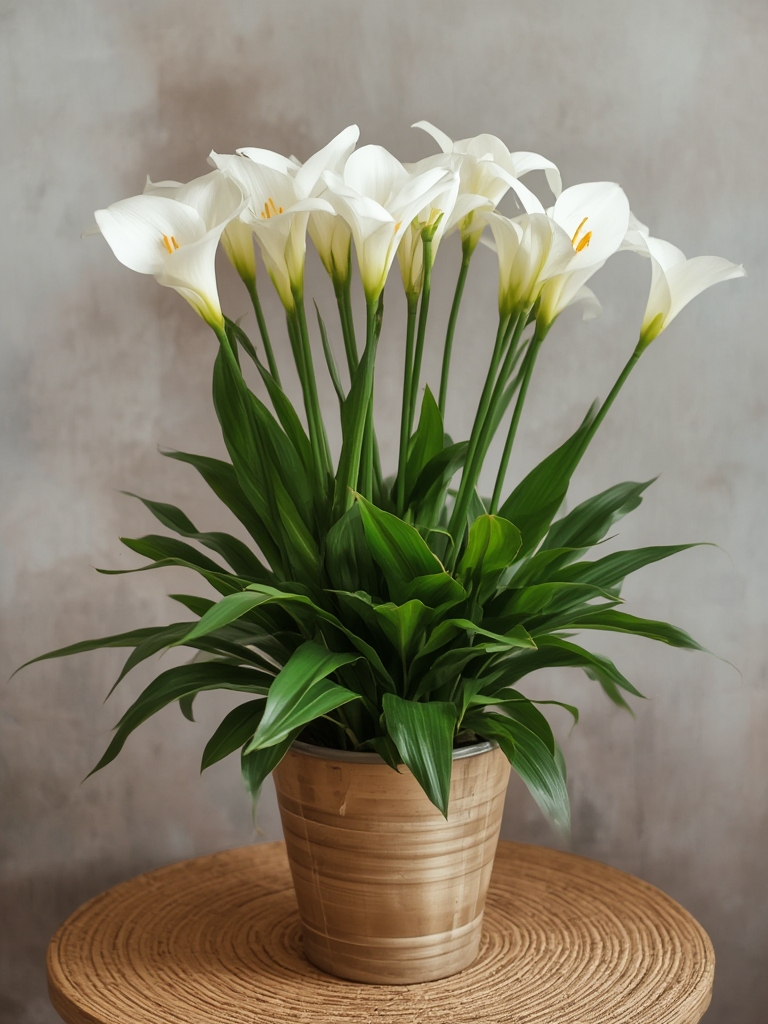
Materials & Supplies
- Pot with drainage holes: 6-8 inch pot for young plants, larger for mature specimens
- Well-draining potting mix: Preferably with peat moss, perlite, and a bit of bark
- Watering can: With a narrow spout for controlled watering
- Spray bottle: For increasing humidity around the plant
- Pruning shears or scissors: Clean and sharp for removing damaged leaves
- Liquid houseplant fertilizer: Balanced, diluted to half-strength
- Humidity tray (optional): To increase moisture in dry environments
- Plant stake (optional): For supporting tall flowering stems
Timing / Growing Schedule
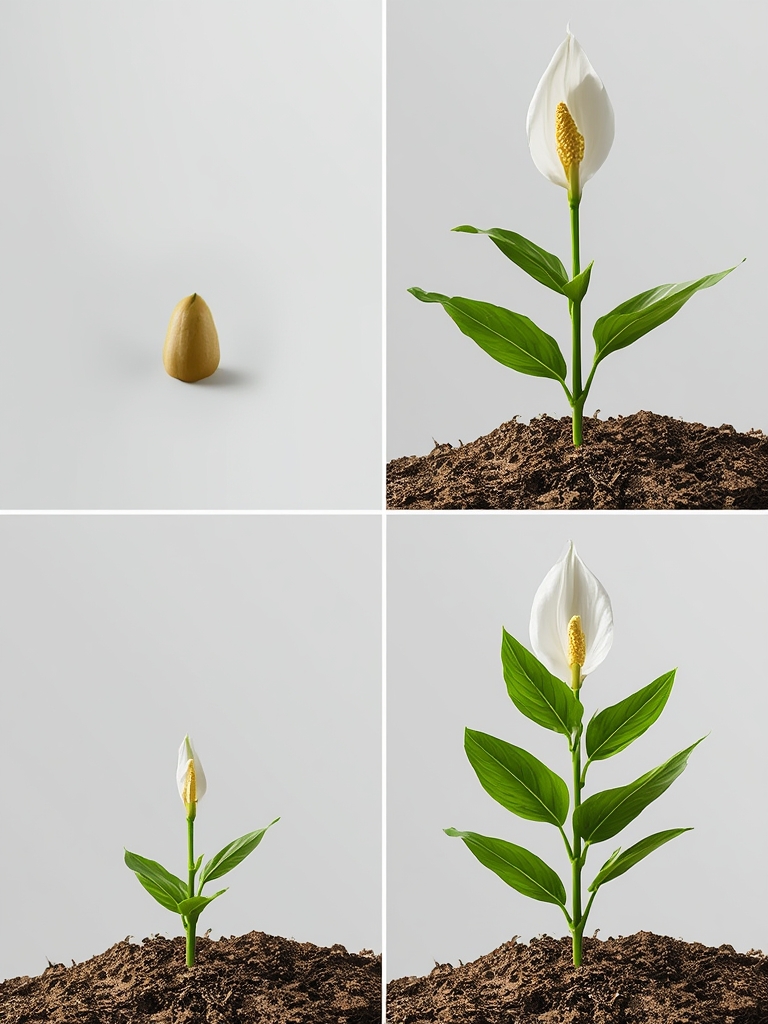
Peace lilies can be purchased and grown year-round as houseplants. Spring and summer are their active growing periods, when you’ll see the most growth and blooms. Flowering typically occurs throughout spring and summer but can happen any time of year under optimal conditions. Repotting is best done in early spring before the active growing season begins. Allow about 12-18 months between repotting sessions for most peace lilies.
Step-by-Step Instructions
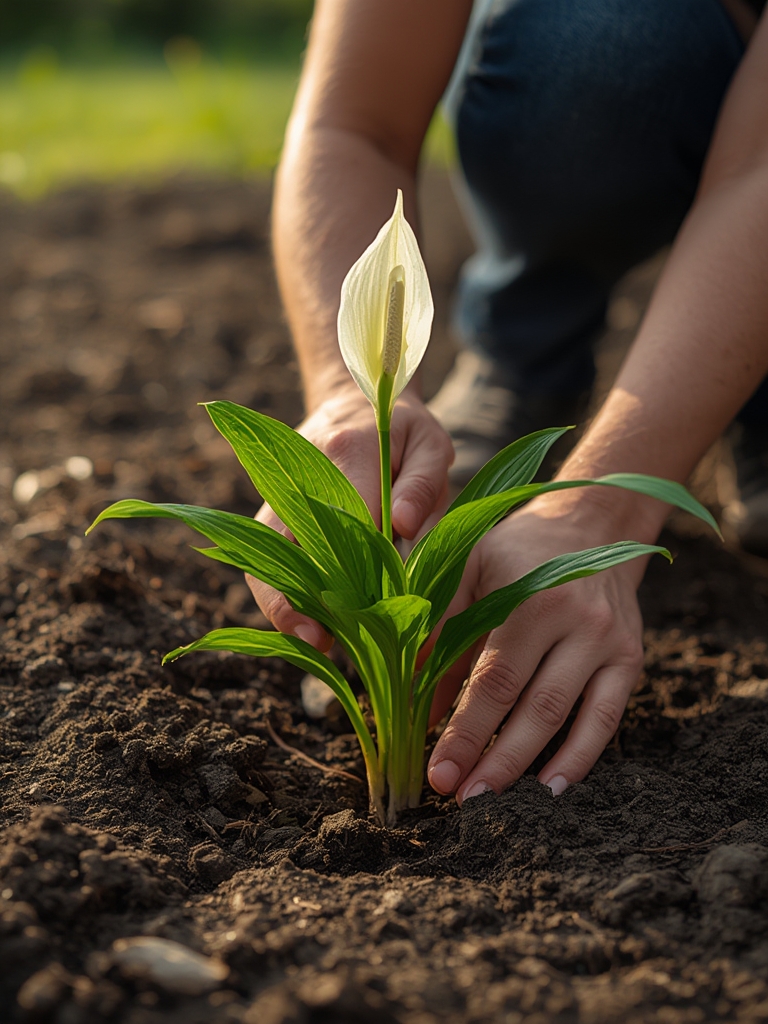
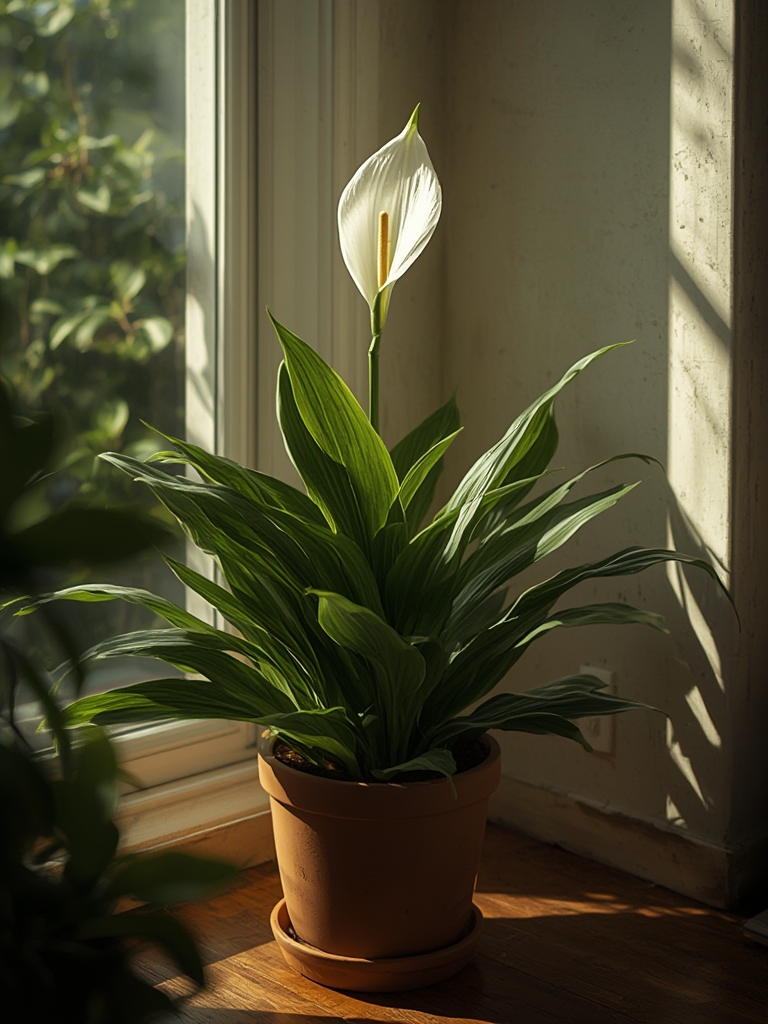
Select the right location: Place your Peace lily plant in bright, indirect light. Direct sunlight can scorch the leaves.
Prepare the pot: Ensure it has drainage holes and fill with well-draining potting mix.
Planting: Position the plant at the same depth it was in its original container, gently spreading the roots.
Watering routine: Water thoroughly when the top inch of soil feels dry. Poor watering habits often lead to peace lily brown tips, so maintain consistency.
Fertilize sparingly: Apply diluted liquid fertilizer every 6-8 weeks during spring and summer.
Maintain humidity: Mist leaves regularly or place on a pebble tray with water.
Monitor for blooms: Flowers typically appear when the plant is mature and receiving adequate light.
Benefits / Advantages
- Air purification: Removes toxins like benzene, formaldehyde, and trichloroethylene
- Low light tolerance: Thrives in conditions where many plants struggle
- Humidity improvement: Adds moisture to dry indoor environments
- Stress reduction: The presence of plants has been shown to reduce anxiety and improve mood
- Aesthetic appeal: Elegant white blooms and glossy foliage enhance interior décor
Tips, Alternative Methods, or Gardening Advice
Consider growing peace lilies in bathrooms where they’ll enjoy the natural humidity. For homes with pets or small children, place them on high shelves as they contain calcium oxalate crystals that can be toxic if ingested. In very dry climates, group peace lilies with other houseplants to create a microclimate with improved humidity.
Common Mistakes to Avoid
- Overwatering: Causes root rot and yellow leaves
- Incorrect lighting: Too much direct sun burns leaves; too little prevents flowering
- Temperature extremes: Keep away from cold drafts and heating vents
- Using untreated tap water: Chlorine and fluoride can cause leaf browning
- Ignoring pest issues: Check regularly for spider mites and mealybugs
Maintenance Tips
Wipe leaves occasionally with a damp cloth to remove dust and enhance their ability to photosynthesize. Trim yellowing or browning leaves at the base. Divide overgrown plants during repotting to create new specimens. After flowering, cut the spent bloom stalk at the base to encourage new growth.
Conclusion
The Peace lily plant offers the perfect combination of beauty and ease of care for both beginners and experienced plant enthusiasts. By following these guidelines, you’ll avoid common issues like peace lily brown tips and enjoy healthy, vibrant plants that purify your air and brighten your home. Start your peace lily journey today and discover why this classic houseplant has remained popular for generations.
FAQs
How often should I water my peace lily?
Water when the top inch of soil feels dry to the touch, typically once a week, adjusting for season and humidity.
Why aren’t my peace lilies flowering?
Insufficient light is the most common reason; try moving to a brighter location with indirect light.
Can peace lilies be grown outdoors?
They can thrive outdoors in warm, humid climates (USDA zones 10-12) in shaded locations.
How do I know if my peace lily needs repotting?
Signs include roots growing through drainage holes, water running straight through the pot, or visibly crowded roots.
Are peace lilies safe for pets?
No, they contain calcium oxalate crystals that are toxic to cats and dogs if ingested.